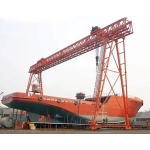



- A5


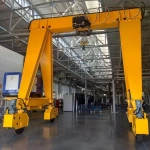
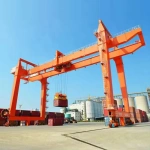
The MG series double-girder gantry crane with hook is engineered for superior load-handling performance and operational reliability. Its core framework integrates a robust box-type steel construction, ensuring high structural integrity under demanding conditions. Key components include the main gantry, a precision-engineered lifting trolley, dedicated travel mechanisms, an operator cabin, and advanced electrical controls.

Engineered with a dual-girder design and optimized track alignment, the gantry offers exceptional load distribution. The legs are available in Type A or Type B configurations to suit specific site layouts and lifting requirements. All crane movements—including trolley traversal, gantry travel, and hoisting—are managed from an ergonomically designed, fully enclosed cabin. The operator station features an adjustable seat, anti-fatigue floor insulation, and safety-tempered glass windows. Optional accessories such as air conditioning, fire safety equipment, communication systems, and acoustic alarms are available for enhanced usability.
Key Operational Features:
Advanced drive systems enable smooth acceleration and deceleration, minimizing load swing.
High-efficiency motors and variable frequency drives (VFDs) allow for step-less speed control, contributing to energy savings.
Low-noise operation paired with a spacious cabin layout ensures clear visibility and reduced operator fatigue.
Modular components and standardized parts simplify maintenance and improve interchangeability.
The crane structure utilizes a welded steel box design, finished with anti-corrosion primer and protective topcoat.
Integrated Safety Mechanisms:
Overload limit switch to prevent excessive lifting.
Durable polyurethane buffers for reliable impact absorption.
Insulated runway conductors (rigid or flexible) can be specified based on project requirements.
The MG double-girder gantry crane with hook serves as a flexible heavy-duty solution for diverse material handling needs across multiple sectors. Engineered to perform reliably in open-air environments and demanding industrial settings, it delivers precision and power for critical lifting operations.
Primary Operational Environments:
1. Outdoor Storage & Logistics Hubs
Ideal for loading/unloading bulk goods, machinery, and oversized items in storage yards and distribution centers. Its all-weather capability and wide span allow efficient transfer of cargo between trucks and storage zones, optimizing yard space and workflow.
2. Railway & Freight Infrastructure
Supports freight operations by loading and unloading railcars, handling containers, and moving track maintenance equipment. The crane’s rail-aligned design enables smooth cargo transfer directly from train to storage, minimizing manual handling.
3. Heavy Construction & Infrastructure Projects
Used to position structural steel, precast concrete elements, and construction machinery on site. With high lifting height and traverse flexibility, it assists in erecting frameworks and transporting materials across large project areas.
4. Manufacturing & Assembly Plants
Facilitates movement of heavy components along production lines, supports machine installation, and assists in assembly processes. Its precise control allows accurate placement of large parts, improving workflow continuity.
5. Warehousing with High-Storage Racking
Enables stacking and retrieval of palletized goods or heavy items in high-bay warehouses. The double-girder design offers the strength needed for top-tier storage management while maximizing vertical space utilization.
6. Shipbuilding & Port Maintenance
Handles ship sections, engines, and large marine components in shipyards. Its robust construction and lifting stability make it suitable for assembly tasks and equipment handling in coastal or industrial marine environments.
7. Metal Processing & Heavy Industries
Capable of moving steel coils, plates, and fabricated metal products in mills or processing plants. Designed to perform under tough conditions, including temperature variations and frequent heavy lifting cycles.
This crane model increases operational safety, reduces reliance on multiple machines, and adapts to both scheduled and intermittent lifting tasks—making it a cost-effective choice for industries requiring durable and versatile overhead handling systems.