


- A7
Introduction of Double Girder Heavy Duty Ladle Crane
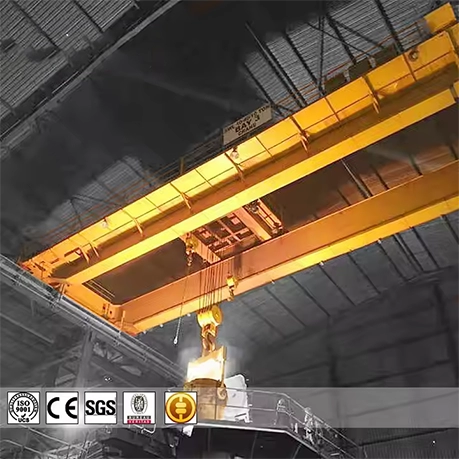
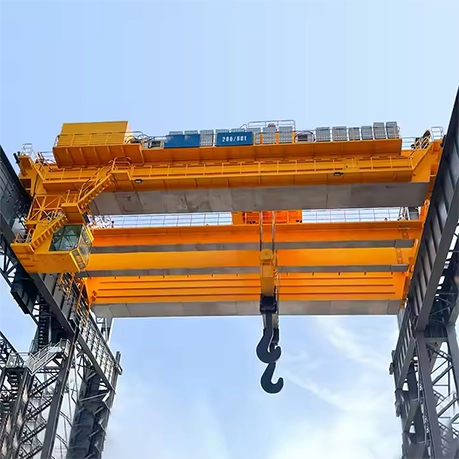
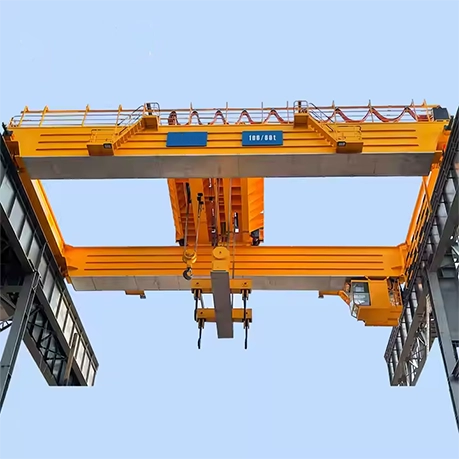
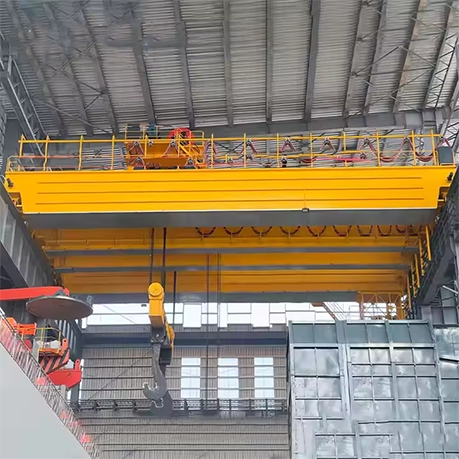
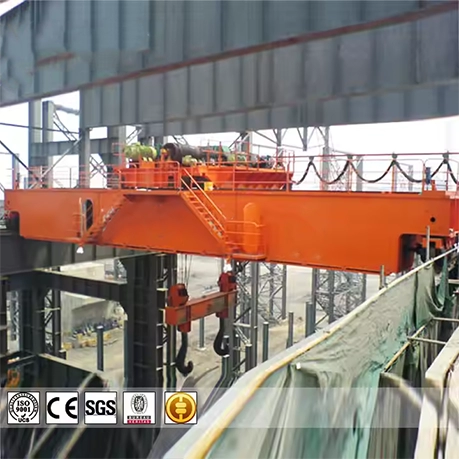
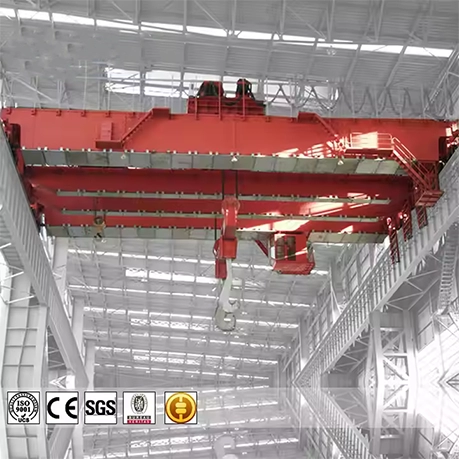
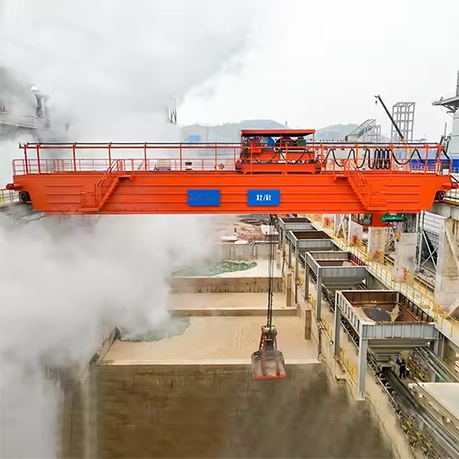
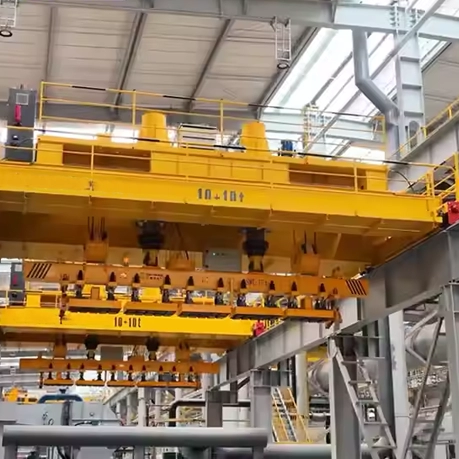
The YZ Casting Bridge Crane is a robust double-girder, single-crab overhead system engineered for demanding metallurgical applications. Its core structure integrates a reinforced bridge frame, a high-capacity crab assembly, a rigid connecting traverse, a precision trolley travel mechanism, and advanced electrical controls. This configuration ensures reliable performance in environments involving molten steel transport, ladle handling, and auxiliary pouring operations.
Features of Double Girder Heavy Duty Ladle Crane
Structural Design & Thermal Management
Fabricated from high-strength Q235B/Q345B carbon steel using seamless single-pass forming technology, the crane’s girders deliver exceptional load-bearing capacity and structural integrity. Key electrical systems and the trolley drive are housed within the girder enclosures for protection and space efficiency. To counter high-temperature exposure, the electrical panel room is insulated with fire-resistant rock wool and includes an integrated air cooling system. Additionally, a full-span thermal baffle installed beneath the girder shields metal components from radiant heat emitted by molten steel.
Drive & Motion System
The trolley travel mechanism utilizes a four-corner drive design, which ensures balanced force distribution, smooth acceleration, and minimized wheel slippage. This configuration enhances positioning accuracy and extends the service life of running gears.
Hoisting & Control Features
Equipped with a main hoist system using a constant-spacing connecting traverse, the crane provides steady lifting and tilting control for steel ladles. An auxiliary hook works in sync with the main unit to facilitate tasks such as molten steel pouring and slag transfer. The main hoist is further safeguarded with an overspeed safety switch to prevent uncontrolled descent.
Integrated Monitoring & Weighing
A dedicated electronic weighing system allows real-time load measurement, with displays accessible from both the operator’s cab and the bridge. This supports precise load management and operational oversight.
Safety & Compliance Systems
The YZ crane incorporates multiple protective features, including:
Weight overload limiter
Lifting and travel limit switches for both crane and trolley
Low-voltage protection
Emergency stop control
Braking systems with F-class insulated motors for thermal resilience
Technical Parameters of Double Girder Heavy Duty Ladle Crane
Components & Quality Assurance
Critical components include ZPMC-brand spreader hooks, vacuum-cast wheels for reduced wear, and reducers with high-torque drums. All elements are selected to meet international design standards for performance and workplace safety.
Applications of Double Girder Heavy Duty Ladle Crane
The Double Girder Heavy Duty Ladle Crane is a mission-critical asset in high-temperature metallurgical operations, specifically engineered to manage the complex logistics of molten material handling. It serves as the backbone for core processes in steel mills and foundries, where precision, safety, and uptime are non-negotiable.
Core Operational Roles:
1. Primary Molten Steel Logistics:
The crane's main hook, integrated with a constant-spacing connecting traverse, is the primary interface for steel ladle transport. This system guarantees a balanced and secure lift, transferring ladles filled with molten steel from the furnace area to continuous casting stations or pouring platforms. The traverse design is critical for preventing dangerous ladle sway, which is essential for protecting both personnel and equipment from high-temperature spills.
2. Coordinated Pouring and Slag Management:
In tandem with the main hook, the synchronized auxiliary hook takes on a pivotal role in the finishing stages of production. It actively assists in the controlled tilting and pouring of molten steel into molds and is equally vital for handling the subsequent by-product—molten steel slag. This dual-hook teamwork allows for a seamless, efficient workflow from furnace tapping to slag disposal, streamlining the entire casting cycle.
3. Plant Versatility and Auxiliary Handling:
Beyond its primary duties with molten materials, the crane's robust design offers significant utility across the plant floor. It is frequently deployed for repositioning heavy ingot molds, transporting large-scale maintenance components like furnace liners, and handling raw material batches, thereby consolidating multiple heavy-lift requirements onto a single, reliable platform.
4. Ensuring Safety in Extreme Environments:
Operating in conditions with extreme heat and heavy loads, the crane's built-in safety systems are paramount. Features such as overload limiters, anti-sway technology, and thermal shielding work in concert to create a secure operating envelope. This proactive safety architecture minimizes operational risks and ensures compliance with stringent industrial safety protocols.
Key Application Environments:
Electric Arc Furnace (EAF) and Basic Oxygen Furnace (BOF) Areas: For the initial lifting and movement of tapped molten steel.
Continuous Casting Lines: Precisely positioning ladles over the tundish to initiate the casting process.
Slag Processing and Disposal Zones: Transporting and emptying slag pots for recycling or landfill.
Mill Maintenance Bays: Lifting and moving large machinery, replacement parts, and equipment during scheduled or unscheduled downtime.
In essence, this ladle crane is not just a lifting device but an integrated material handling solution that enhances throughput, enforces safety, and ensures operational continuity in the most demanding metallurgical applications.